
Inside the 2026 Restoration Trends: An Aging Workforce, a Quiet Hurricane Season, and a Shift to Data-Driven Jobs
Year-end and mid-year industry reporting on the restoration sector points to three forces reshaping how shops staff, price, and run jobs this year.
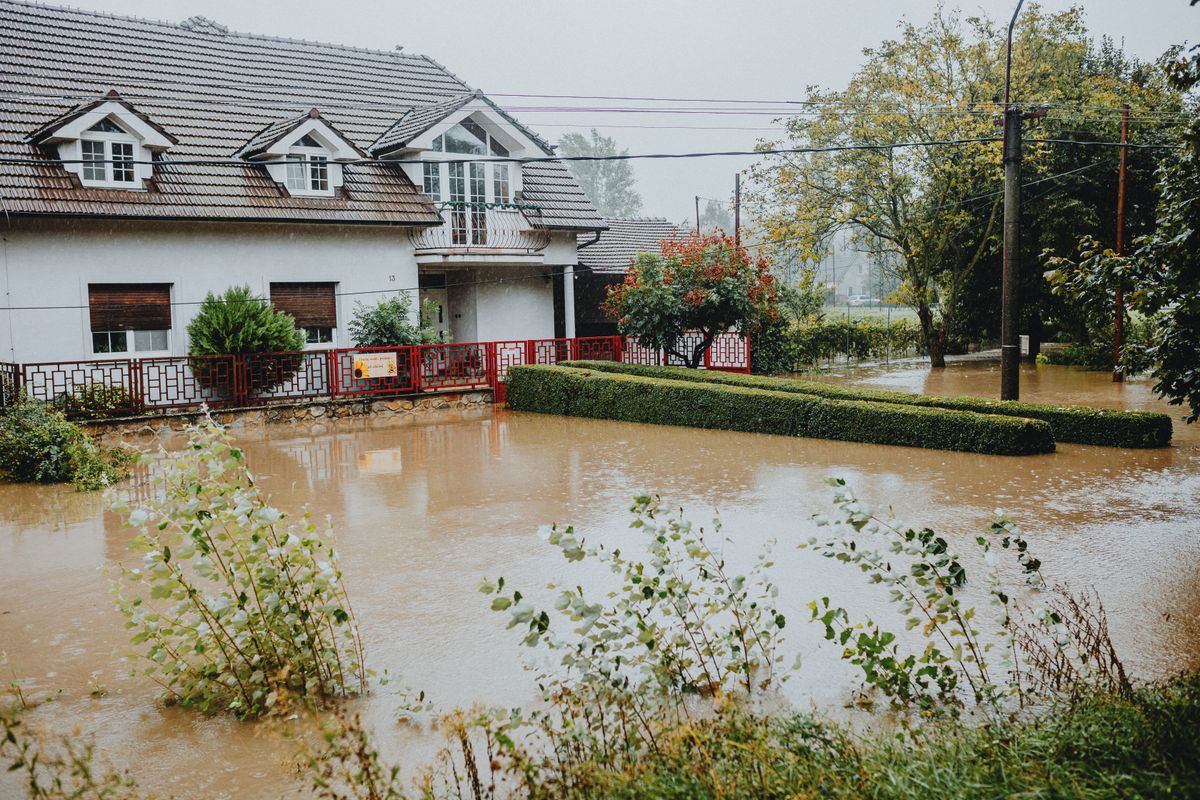
Trade publications and market research covering the restoration industry this year have converged on a handful of themes that operators are already feeling on the ground: a workforce that's aging out faster than it's being replaced, a claims environment reshaped by an unusually quiet 2025 hurricane season, and a broader shift toward centralized, data-backed decision-making on complex jobs. None of these are hypothetical trends on a slide deck. Each shows up directly in staffing plans, claims volume, and how larger losses get run.
The labor pipeline is the industry's most cited long-term risk
Restoration and remediation trade coverage this year has repeatedly flagged workforce age as a structural problem, not a cyclical one. U.S. Bureau of Labor Statistics data cited in industry reporting shows more than one in five construction workers, a category that overlaps heavily with the restoration trades, is now 55 or older. That's a meaningful share of the skilled workforce approaching retirement over the next decade, in an industry that has historically relied on word-of-mouth recruiting and on-the-job training rather than a formal pipeline. Shops that have started building relationships with trade schools and community college programs, or that have formalized apprenticeship-style ramp-up paths for new hires, are doing so explicitly in response to this gap, not as a generic hiring nicety.
Roughly how many inbound calls do you take in a week?
Tap to start. 5 quick questions, then see your monthly number.
A rare quiet hurricane season reset claims volume
2025 was, by industry accounts, an unusual year: no hurricane made landfall in the continental United States, the first time that's happened since 2015. For a sector where a meaningful share of annual revenue for many companies is tied to catastrophe response, a quiet season doesn't just mean less large-loss work, it resets expectations for the following year's staffing and equipment planning. Operators who scaled up crews and drying equipment inventory anticipating a normal storm season found themselves carrying that capacity through a year of lighter demand. Several operators report treating storm-season revenue more conservatively in their planning as a result, building the base business around daily water and fire losses rather than assuming a catastrophe season will backstop a slow year.
The insurance market is loosening after seven tight years
Coverage of the property insurance market this year describes a shift into a softer market after roughly seven years of tightening, meaning more carriers entering or re-entering markets, more competitive underwriting, and premiums that are stabilizing or declining in some regions rather than climbing. For restoration companies, a softer insurance market can cut two ways: more competitive carrier pricing sometimes comes with closer underwriting scrutiny on claims, and carriers with room to compete on service may push harder on turnaround times and documentation standards from their preferred restoration vendors. Operators report watching this shift closely, since it changes how much leverage a carrier has when negotiating scope and pricing on a given claim.
A quiet storm season does not mean a quiet year. It means the daily water and fire losses become the business, not the backup plan.
"System-driven" restoration is replacing "hero-driven" restoration on large losses
Industry trend coverage this year describes a shift, especially on complex and large losses, from what's often called hero-driven restoration, one experienced project manager holding the entire job's status in their head, to system-driven restoration, where centralized data, shared moisture and drying records, and remote expert review support decisions instead of relying on one person's memory and instinct. That shift shows up most visibly in how multi-location and franchise restoration groups are structuring large-loss response, but the underlying habit, log everything centrally, make it visible to more than one person, is available to smaller shops too, and doesn't require enterprise software to start.
Consolidation is reaching the software layer, not just the operator layer
Restoration-specific software has seen its own round of consolidation this year, including at least one notable acquisition combining a restoration-focused operating platform with an estimating and collections service, a sign that the tools restoration companies rely on for pricing and getting paid are themselves being bundled into fewer, broader platforms. For operators, that consolidation trend is worth watching less as industry trivia and more as a practical signal: the standalone point-tool an operator adopts today may get folded into a larger platform within a year or two, which is a reasonable factor to weigh when committing to a new system.
What this adds up to for a shop planning the next twelve months
None of these forces demand an overnight overhaul. But together they point toward a few concrete planning questions worth asking now: where is the next generation of technicians actually going to come from, is the business plan built around catastrophe revenue that might not show up, and is documentation centralized enough that a job's status doesn't live only in one project manager's head. Shops that treat 2026 as a normal year and plan for average demand, rather than betting on a big storm season to make the numbers work, are the ones industry coverage suggests are best positioned regardless of which way the next twelve months break.
Most shops lose more booked work at the phone than they realize. See your monthly number.
See my number →